
English version below
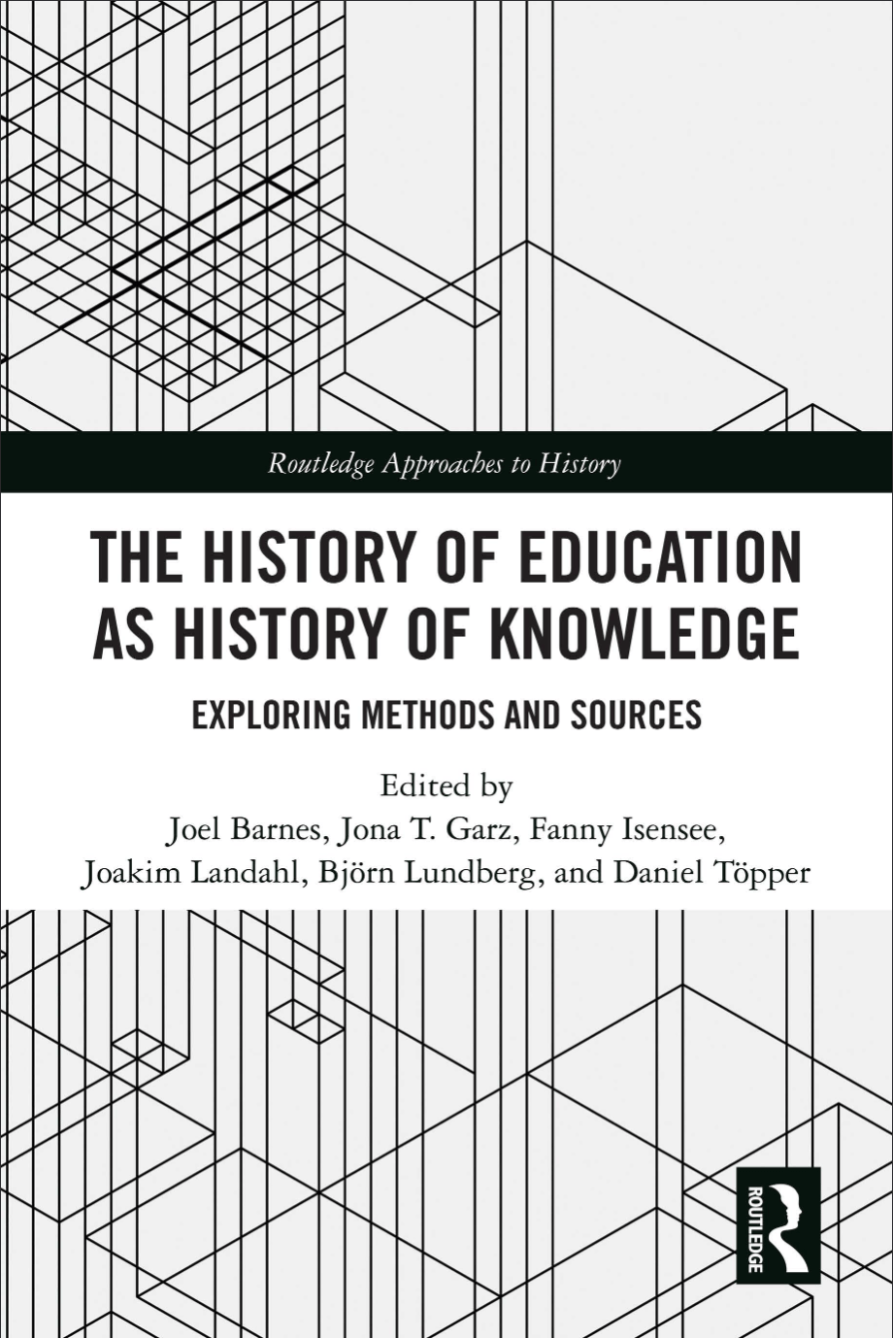
Im August 2026 ist der Band The History of Education as History of Knowledge bei Routledge erschienen, der erörtert, wie das wachsende Feld der Wissensgeschichte die Bildungsgeschichte bereichern kann. Die Herausgebenden des Bandes – Joel Barnes, Jona T. Garz, Fanny Isensee, Joakim Landahl, Björn Lundberg und Daniel Töpper – bilden gleichzeitig eine wissensgeschichtliche Standing Working Group im Rahmen der International Conference for the History of Education. Entsprechend ist der Band mit Texten zahlreicher Wegbegleiter_innen gespickt, die sich schon seit ein paar Jahren mit der Verknüpfung von Wissens- und Bildungsgeschichte befassen.
So auch Eduardo Galak, Daniela Mansi (beide Universidad Nacional La Plata) und ich, die wir das Kapitel ›Experts‹ and ›Learners‹? Programa Diem/Projekt Argentinien as a Case for Tracing the Methodological Potential of Knowledge Circulation Within Postcolonial and Unequal Power Contexts beigesteuert haben. Darin erörtern wir, inwiefern der Wissenszirkulation methodologische Potenzial innewohnt, wenn man Kontexte untersucht, die von ungleichen Machtverhältnissen geprägt sind.
Nach einigen gemeinsamen Vorträgen ist das nun unsere erste gemeinsame Publikation zu unserem Forschungsprojekt, das die Wissensproduktion und Wissenszirkulation zwischen Argentinien und Westdeutschland im Kontext des Kalten Krieges untersucht. Ich freue mich sehr!
In August 2026, the volume The History of Education as History of Knowledge was published by Routledge, exploring how the rapidly growing field of the history of knowledge can enrich the history of education. The volume’s editors – Joel Barnes, Jona T. Garz, Fanny Isensee, Joakim Landahl, Björn Lundberg, and Daniel Töpper – also form a history-of-knowledge Standing Working Group within the International Conference for the History of Education. Accordingly, the volume is filled with contributions from numerous fellow companions who have already been working on the connections between the history of knowledge and the history of education for several years.
Among them are Eduardo Galak, Daniela Mansi (both Universidad Nacional de La Plata, Argentina), and myself, who contributed the chapter ›Experts‹ and ›Learners‹? Programa Diem/Projekt Argentinien as a Case for Tracing the Methodological Potential of Knowledge Circulation Within Postcolonial and Unequal Power Contexts. In it, we discuss the extent to which the circulation of knowledge holds methodological potential for examining contexts shaped by unequal power relations.
After a few joint conference talks, this is now our first joint publication on our research project, which examines the production and circulation of knowledge between Argentina and West Germany in the context of the Cold War. I’m so delighted!

 Lilli Riettiens